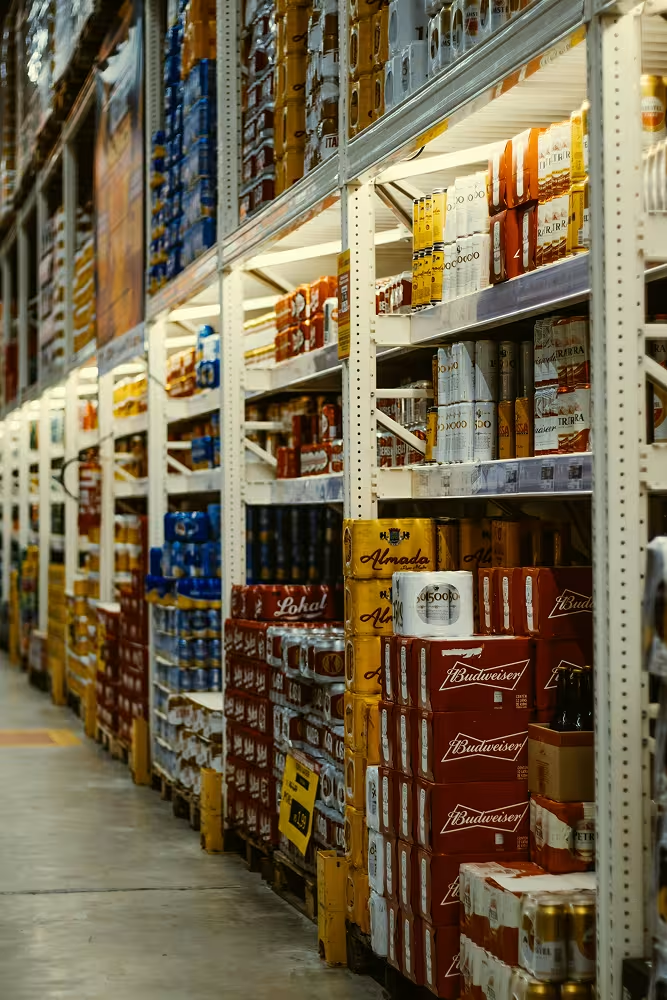
Breakage due to insufficient visibility of the stock

Differences between physical and theoretical inventories make replenishment planning difficult.
Integration with ERP systems guarantees real-time visibility of stock and avoids discrepancies.


150+ companies trust us





























The marked seasonality and promotional campaigns generate consumption peaks that are difficult to predict. Connecting forecasting, inventory and production allows you to avoid breakages, optimize stock and maintain profitability in a highly competitive market.
Demand peaks occur without room for reaction, generating breaks at critical points.
Traditional models do not reflect the volatility of consumption, causing excess or shortage of product.
Predictive planning integrates different variables, allowing stock and replenishment to be adjusted in advance.
Predictive planning integrates different variables, allowing stock and replenishment to be adjusted in advance.
Algorithms adjust forecasts based on demand by region, channel and category, improving accuracy and reducing deviations.
The integration between forecast and promotional calendar makes it possible to quantify the impact of each campaign and reinforce the replacement before the breakage occurs.

Each distribution center operates with its own information, which generates overstock in some areas and stockouts in others.
The lack of control over product rotation generates losses or returns.
Emergency transfers between warehouses increase costs and reduce efficiency.
Consolidate all inventories into a centralized view and optimize automatic redistribution based on forecast demand and required service level.
Predictive planning applies FEFO criteria, ensuring that products with shorter useful lives are prioritized in distribution and avoiding losses.
Predictive replenishment optimizes coverage levels and plans preventive transfers, reducing reactive transportation.
Lack of communication between departments generates duplicate orders or lack of product.
Urgent orders require partial and off-route deliveries.
Without global visibility, all deliveries are managed the same, affecting key customers.
The integration of demand, supply and transportation under the same system aligns calendars and reduces operational incidents.
Predictive planning allows you to consolidate loads and anticipate optimal routes, minimizing incomplete trips and extra costs.
The system automatically prioritizes orders according to their commercial impact, guaranteeing OTIF compliance for strategic clients.

Forecasts are based on historical orders, without taking into account final demand.
Distributors do not update the forecast when order patterns change.
Limited information exchange with the point of sale prevents precise replenishment planning.
Predictive planning converts sell-out data into net demand, adjusting replenishment to consumers' real needs.
The system detects deviations and recalculates the forecast automatically, synchronizing orders with current demand.
Digital collaboration between distributors and retailers improves sales visibility and allows anticipating product replacement based on actual consumption.

Differences between physical and theoretical inventories make replenishment planning difficult.
Integration with ERP systems guarantees real-time visibility of stock and avoids discrepancies.

Returns due to overstock or expired products increase logistics costs.
Predictive algorithms adjust coverage levels and prioritize product rotation to minimize returns.

Decisions are based on historical data without predictive visibility.
Intelligent dashboards allow you to analyze deviations, predict trends and define corrective actions in real time.
Key indicators that offer a clear vision of the strategic weight that this industry has in the current and future global economy.

Data obtained from Statista*
Connect demand, procurement, and production in one modular cloud platform, designed to adapt to the unique needs of any industry.
We understand how your industry operates, what holds back your supply chain and which decisions are costing you margin, service and capacity.
Activate the capabilities your business needs and expand the solution as your planning evolves.
Get demand planning up and running in a few weeks, and add new processes when you need them.

Avoid lengthy development processes and focus your time on what matters: strategy.
Request a demoBring together information from your existing systems and work from a single source of data.
There is no feedback more genuine than that of those who already use our software.
Access an always-available platform designed to protect your data in line with ISO 27001 certification standards.
 100% Cloud
Start with our demand module, the tool that allows you to calculate how much you will sell.
Add the features that suit your business. Scale at your own pace and expand when you need to, with our functionality set.
Once you've added the features you need, get your price with our calculator. And if you have any questions, we'll sort them out for you.

"The Imperia tool has given us a global vision of all our references organized into production lines and average sales coverage days, in order to better plan and forecast our operations."J. Alberto Iniesta, Head of Logistics at Laboratorios Almond
Implementing the software with Imperia is a quick and straightforward process, starting with the integration of the demand module, and can be complemented with 2 new phases. Incorporating the purchasing module and the production module.
A process with full support from our team, with personalised training and consultancy.
Minimize inventory losses due to damage or expiration.
Decrease the amount of products stored, reducing costs and increasing profitability.
Improve the number of orders delivered in full and within the established period.
The Native AI software that adapts to your specific needs.